AI Receptionist for HVAC Businesses: Peak-Season Call Control
Configure HVAC emergency intake, service-area checks, qualified scheduling, and honest handoffs without relying on fake seasonal averages or ROI claims.
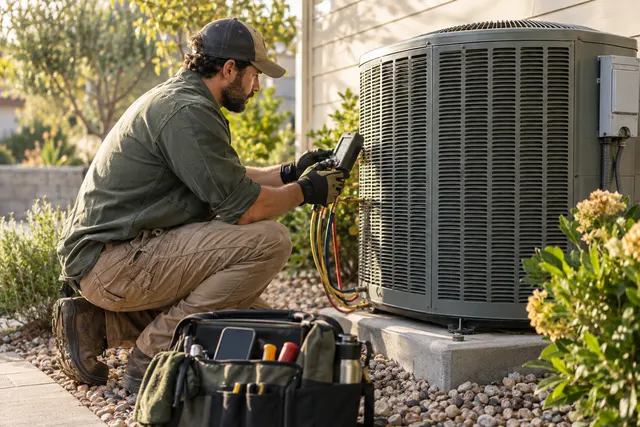
HVAC demand changes with weather, installed equipment, maintenance cycles, and local conditions. A national “peak-season multiplier” cannot tell you how many calls your shop will receive. Your call log can.
An AI receptionist is useful when it applies your real rules during overflow: identify the problem, collect equipment and address details, separate immediate safety concerns from routine service, and book only real capacity.
The HVAC call paths that matter
No heat or no cooling
Capture occupancy, indoor conditions the caller can report, equipment type, symptoms, and any vulnerable-person context the business has chosen to use for priority. The agent should not diagnose equipment.
Gas, smoke, or carbon-monoxide concern
Use a fixed safety path. Immediate danger belongs with emergency services and the utility where appropriate, not an appointment script.
Maintenance or replacement inquiry
Capture system type, age if known, requested service, property type, and timing. Offer a valid estimate or maintenance window without inventing pricing or equipment recommendations.
Existing customer or warranty question
Create the configured callback or follow-up instead of booking duplicate service blindly.
Scheduling must reflect the field team
The software should consider service duration, qualified workers, blocked time, current bookings, and concurrent demand. Test two callers asking for the last slot and a request requiring a skill no available worker has.
NiceAgents currently books in its built-in schedule. Google Calendar is not claimed until the real two-way connection and recovery behavior passes launch proof.
NiceAgents for HVAC
NiceAgents can follow configured HVAC intake, safety, service-area, scheduling, and callback rules; save transcripts, summaries, and outcomes; create leads and follow-ups; and send transactional SMS after line approval.
The product stays available around the clock within provider and plan-channel limits. That is not a guarantee that every attempted call connects.
NiceAgents does not launch with human fallback, live transfer, multilingual support, audio recordings, WhatsApp, or direct field-service-platform integrations.
See the pricing page for current plans, prices, included usage, overage rates and billing terms.
Measure your real peak
Compare several weeks of call data with weather and staffing:
- attempted and connected calls by hour;
- calls outside staffed hours;
- simultaneous-call peaks;
- valid service and estimate bookings;
- urgent callbacks;
- calls that needed human judgment; and
- completed jobs linked to each source.
Use those figures in a scenario, then measure real outcomes after rollout. Do not label every missed call as a lost job or every handled call as recovered revenue.
Failure behavior is part of the product
Ask what happens when scheduling, messaging, telephony, or the model is unavailable. The system should not claim a booking or text that did not complete. It should preserve a truthful callback item when possible and expose the failure to the owner.
Bottom line
HVAC shops do not need a generic promise about call spikes. They need a controlled way to absorb their own peak while respecting safety, territory, staff qualifications, and real capacity.
Configure your actual HVAC services, emergency rules, staff qualifications, and schedule, then test the hardest calls before peak demand.
See NiceAgents for HVAC